Hello everyone! This is Standard Korea, bringing you the most authentic flavors of South Korea. If you are traveling through the beautiful port city of Busan, you will see countless restaurants with steaming cauldrons at their entrances.
While Busan is famous for its beaches and seafood, there is one dish that truly represents the heart and history of its people: Dwaeji-gukbap (Pork Rice Soup). Today, let’s dive deep into why this humble bowl of soup is a “must-eat” and how you can enjoy it like a true local.
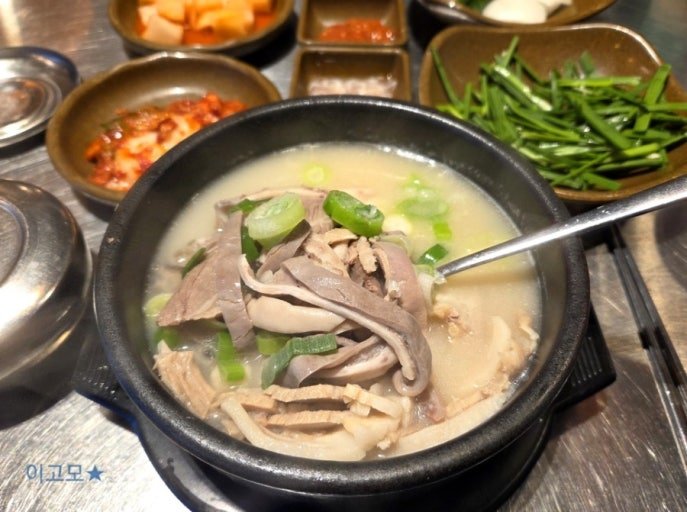
1. What exactly is Dwaeji-gukbap?
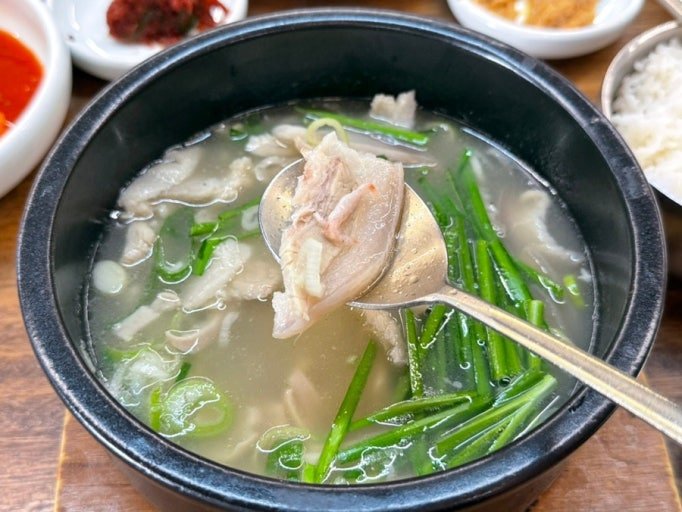
At its core, Dwaeji-gukbap is a hearty soup made by simmering pork bones for hours until the broth becomes rich and milky. It is served with tender slices of boiled pork (suyuk) and a bowl of warm rice.
While it might remind you of a rich Tonkotsu ramen broth or a Western-style pork stew, Dwaeji-gukbap is unique for its “rough yet warm” soul. In Busan, it is more than just a meal; it’s a bowl of comfort that locals turn to when they need a boost of energy or a warm hug for their stomach.
2. A Taste of History: Born from Resilience
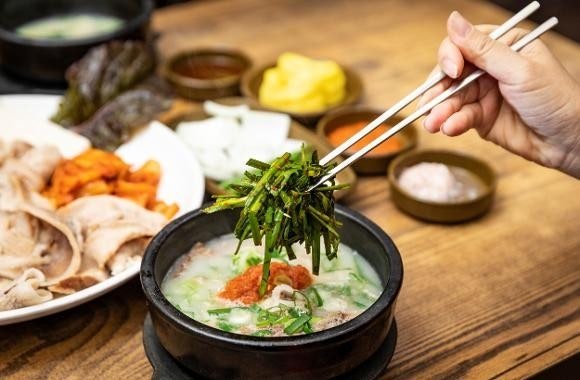
Why is this dish so iconic to Busan? The history of Dwaeji-gukbap is deeply tied to the Korean War in the 1950s.
During the war, Busan became a city of refugees. With food being scarce, refugees began making soup using pork bones and leftover cuts of meat provided by the U.S. military bases. What started as a meal of survival has evolved into a beloved culinary symbol of Busan. Every bowl tells a story of the city’s resilience and the warm-hearted spirit of its people.
3. How to Eat Dwaeji-gukbap Like a Busan Local
When you enter a Gukbap restaurant, you might be overwhelmed by the various small dishes and seasonings on your table. Don’t worry! Here is a step-by-step guide to seasoning your soup to perfection.
Step 1: Taste the “Pure” Broth First
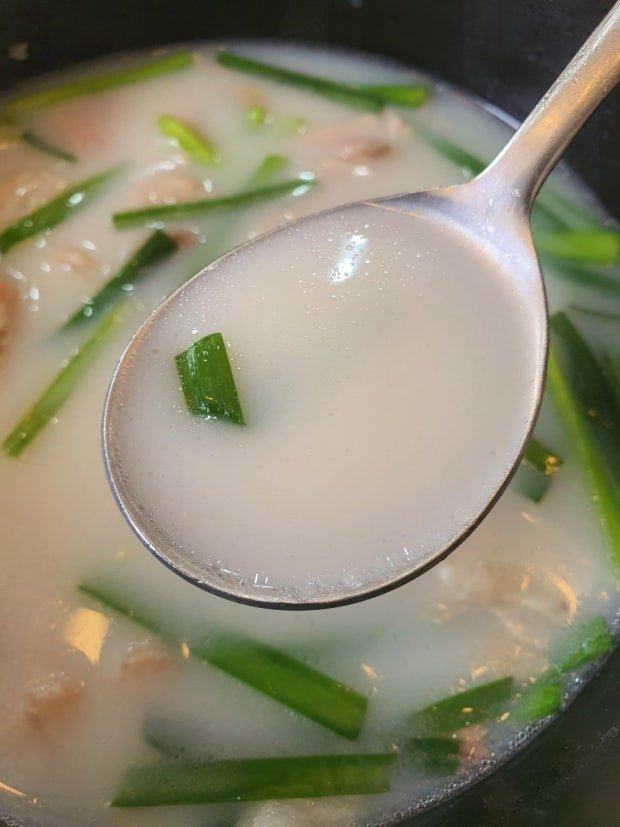
Before adding anything, take a spoonful of the broth. Some restaurants serve a clear, light broth, while others serve a thick, milky one. Experience the natural depth of the pork flavor first.
Step 2: Add the “Jeongguji” (Chive Salad)
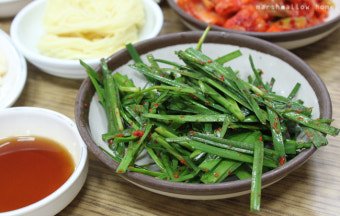
You will see a plate of seasoned chives. In the Busan dialect, we call this Jeongguji. Don’t just eat them as a side dish—dump a generous amount into your hot soup! The chives take away any “porky” smell and add a fresh, crunchy texture.
Step 3: Season with Salted Shrimp (Saeu-jeot)
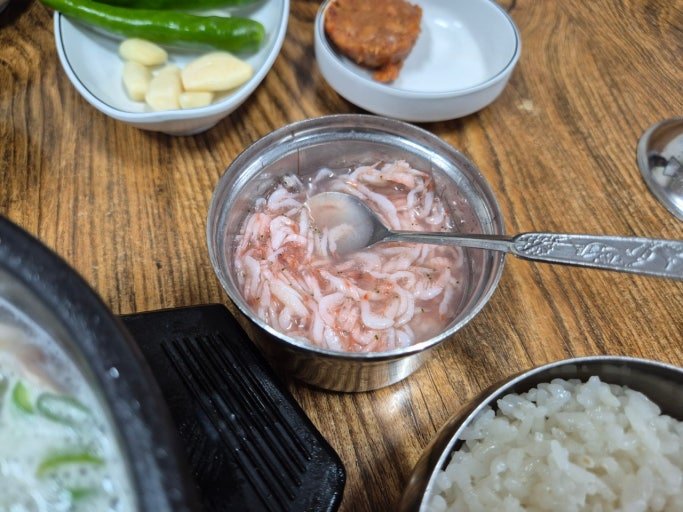
Instead of salt, Koreans prefer using Saeu-jeot (Salted Shrimp) to season the soup. These tiny shrimp add a deep umami flavor and contain enzymes that help digest the pork. Add them little by little until it’s perfectly salty for your taste.
Step 4: The Final Kick – “Dadaegi” (Spicy Paste)
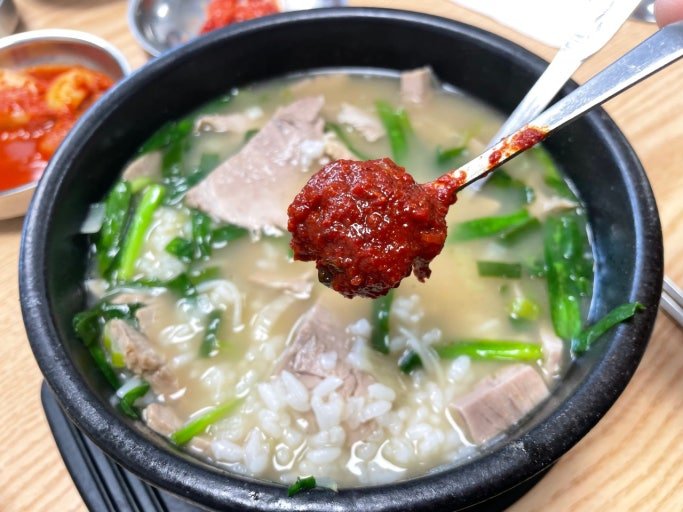
If you like a spicy punch, dissolve the red chili paste (Dadaegi) into your soup. Watch your broth turn from white to a vibrant red, giving it a refreshing, spicy finish that is perfect for a hangover or a cold day.
4. The Perfect Sidekicks
Your Gukbap experience is not complete without these side dishes:
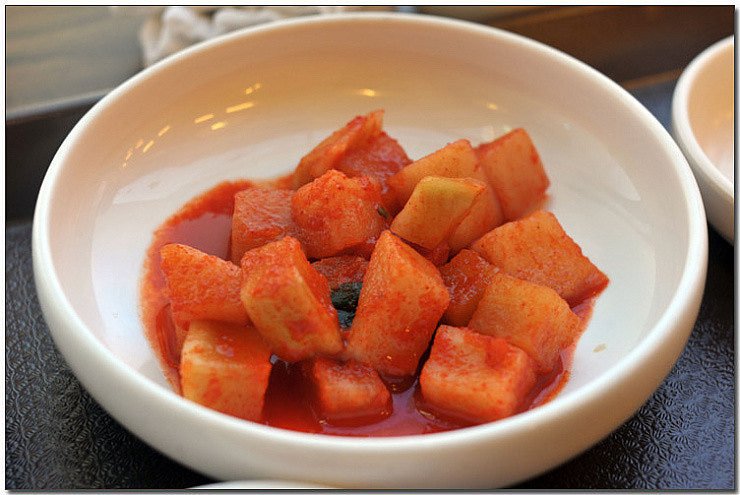
- Kkakdugi (Radish Kimchi): A bite of crunchy, sour radish kimchi on top of a spoonful of rice and pork is the “golden rule.”
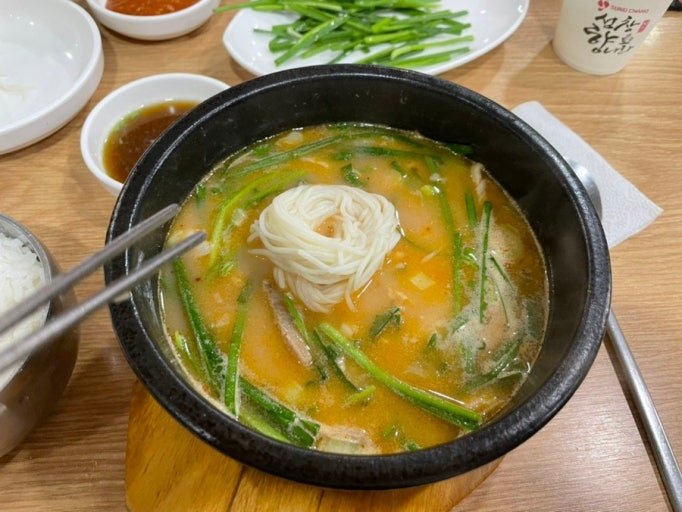
- Somyeon (Noodles): Many places give you a small knot of thin wheat noodles. Drop them into the hot broth and eat them first before diving into the rice.
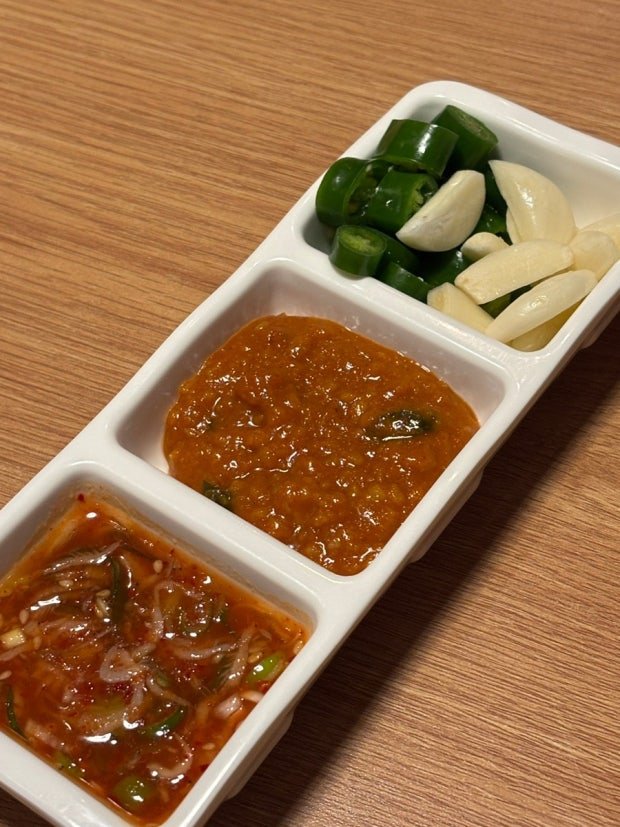
- Raw Onion, Garlic, and Peppers: Dip these in the savory soybean paste (Ssamjang) to cleanse your palate between bites of rich pork.
5. Which Style Should You Choose?
Even within Busan, there are two main styles of Dwaeji-gukbap:
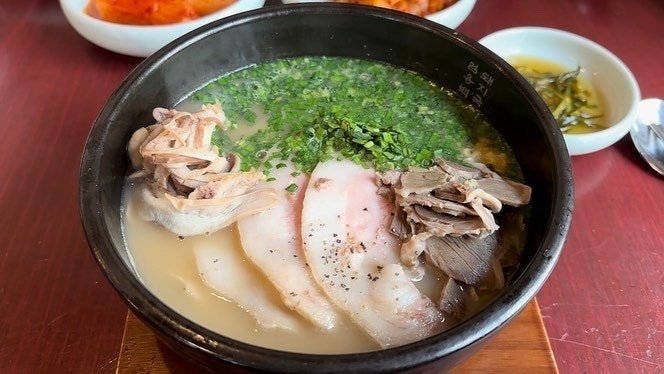
- Miryang-style (Rich & Thick): A very milky, heavy broth made primarily from bones. Perfect if you’re looking for a heavy, nutritious meal.
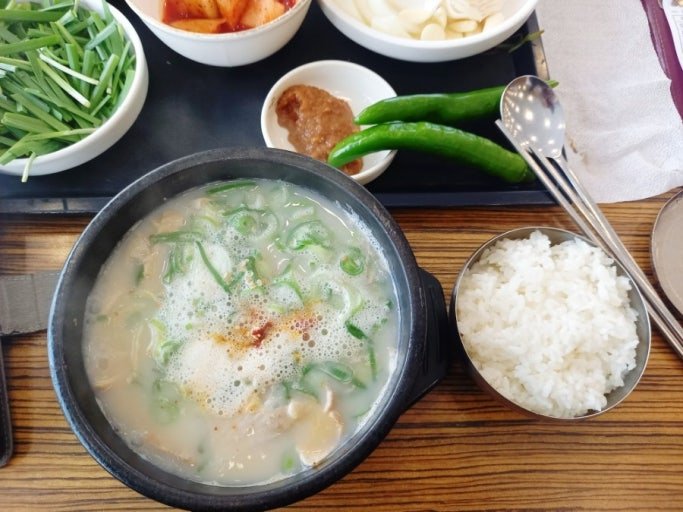
- Daegu/Busan-style (Clear & Clean): A lighter, clearer broth made with more meat cuts. Highly recommended for first-timers who might be sensitive to strong pork scents.
6. A Message from a Local
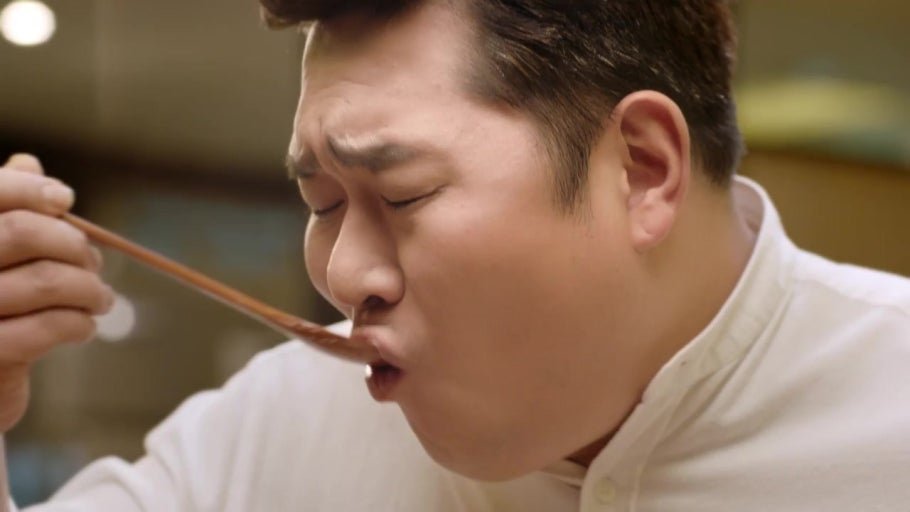
Dwaeji-gukbap isn’t a “fancy” food. It’s a humble, honest dish. After a long day of exploring the windy coastlines of Busan, sitting down in a small, steam-filled alleyway restaurant for a bowl of Gukbap is an experience you won’t find anywhere else.
Whether you are eating alone or enjoying it with friends over a bottle of Soju, this dish will show you the “real” Busan. Forget the trendy cafes for a moment and step into an old Gukbap joint—your taste buds will thank you.